Every year, UK and European production companies send crews to Cyprus. Most of them underestimate what it takes to get everything working on the ground. We know because we are usually the call that fixes it: we have supported a BBC documentary crew as local producer and fixer, flown the licensed aerial unit for a Channel 5 series, and delivered live coverage of a marathon to national television. The island is generous to productions that prepare, and expensive to productions that improvise.
Here is what visiting crews most often get wrong.
1. Treating permits as a formality
Filming permissions in Cyprus are manageable, but they are not an afterthought you sort on arrival. Drone work in particular is regulated: aerial filming needs a licensed, insured operator and the right clearances for each location. When Channel 5 needed Cyprus from the air for Jewels of the Med, the reason the aerial days went smoothly is that the licensing and clearances existed before anyone packed a case. If your schedule has the paperwork starting when the crew lands, your schedule is fiction.
2. Underestimating the terrain and the light
Cyprus is not one location, it is a dozen. Coastline, the Troodos mountains, ports, resorts, old-town streets. Distances look small on a map and are not small with a loaded van on mountain roads. Summer light is brutal from late morning; the frames that sell the island live at dawn and dusk, which means your day starts earlier than the call sheets you write at home.
3. Flying everything in
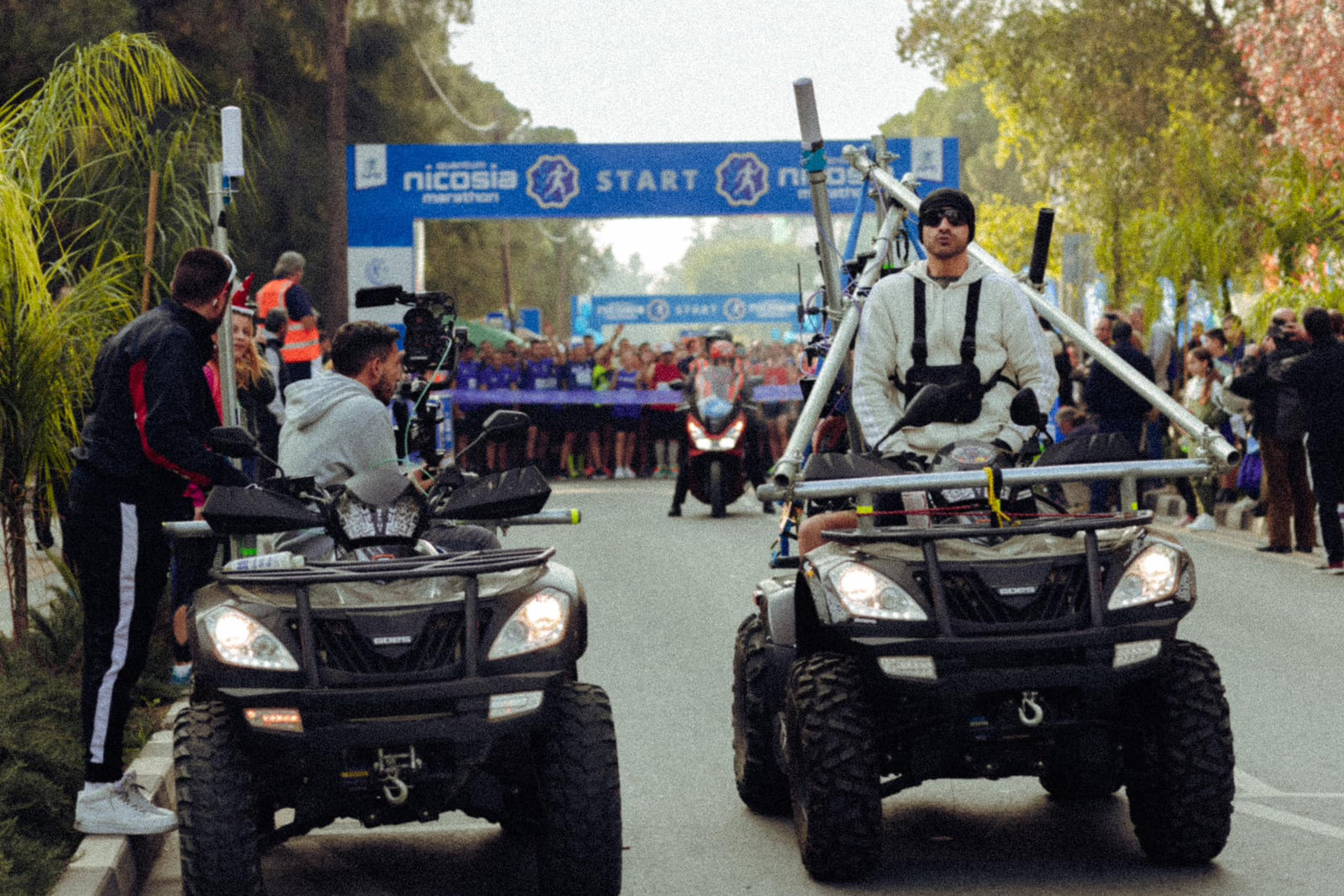
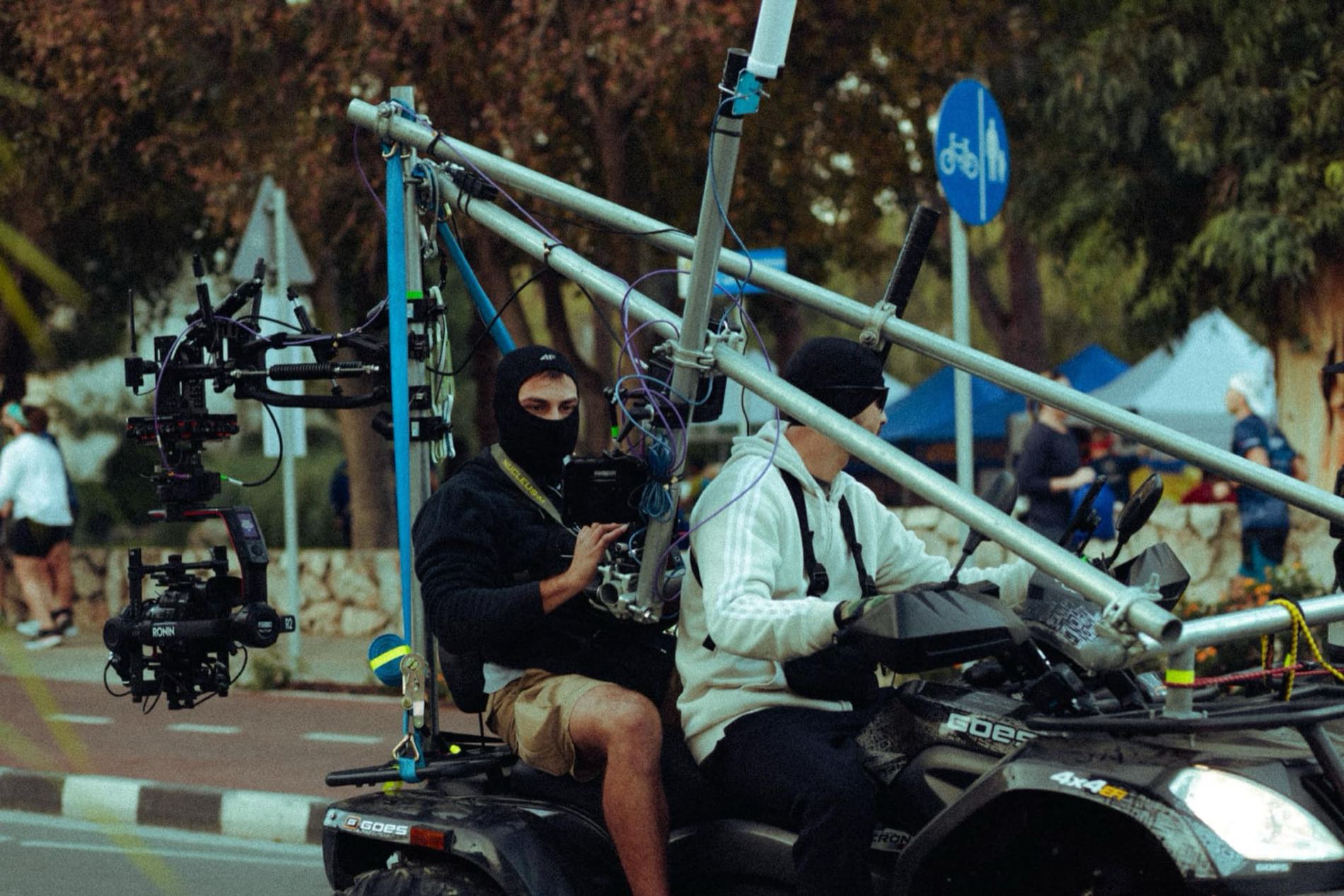
Some kit has to travel with you. Most of it does not, and every flight case you bring is a customs conversation. There is real broadcast-grade equipment and experienced crew on the island. We have built full outside-broadcast setups overnight from local resources, including the year the Quantum Nicosia Marathon went live to national TV with camera positions across a city that closed its roads at dawn.
4. Arriving without a local producer
The difference between a smooth shoot and a lost day is usually one phone call made by someone the location trusts. When the BBC came to film a veteran cosmonaut living in Cyprus, our job as fixer was to make the ground disappear: locations, permits, transport, crew, and in the end the careful digitisation of an archive that could not leave the island. That story is here: The tapes that couldn't leave Cyprus.
The short version
Cyprus rewards preparation. Secure permissions early, respect the distances and the light, hire locally where quality allows, and put one accountable local producer between your production and the island. If you want that to be us, we are easy to find.